
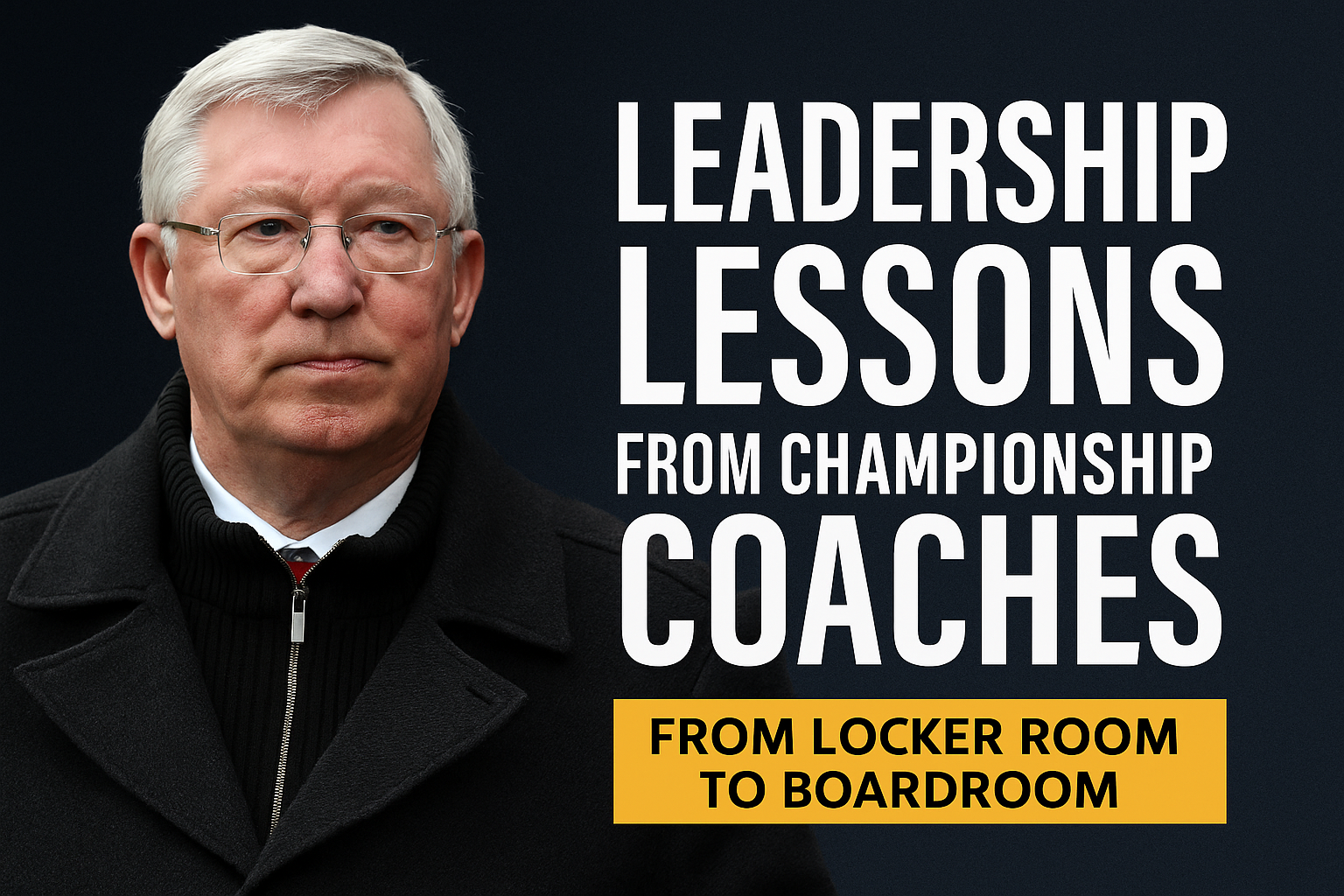

Great coaches in sports aren’t just masters of strategy ,they’re elite leaders who motivate, inspire, and build lasting legacies. In many ways, they’re CEOs in tracksuits, guiding high-performance teams under immense pressure, dealing with egos, setbacks, and the relentless demand to win. The leadership insights we can take from championship coaches extend far beyond the field and into the heart of business.
Here are five leadership lessons from iconic coaches that every team leader, entrepreneur, or executive can apply.
1. Sir Alex Ferguson : Build Trust and Maintain Discipline When managing Manchester United for over 26 years, Sir Alex Ferguson mastered the balance between discipline and trust. He famously established a “no one is bigger than the club” culture. When star players began to overshadow the collective, he made tough decisions , even letting go of legends like David Beckham, to protect team unity.
Business takeaway: Leadership requires decisiveness and clear boundaries. Great leaders earn respect by being consistent and upholding standards. Whether in a startup or a corporation, trust is built through fairness, clarity, and consistency.
2. Phil Jackson :Lead with Purpose and Emotional Intelligence Phil Jackson, who coached Michael Jordan’s Bulls and Kobe Bryant’s Lakers, was known as the “Zen Master.” He brought mindfulness and deeper purpose to the game, helping high-profile athletes channel their focus and ego toward collective success. His coaching style embraced calm, reflection, and emotional mastery.
Business takeaway: Leaders must go beyond KPIs and tap into purpose. Today’s most effective executives understand emotional intelligence, self-awareness, and empathy as core leadership traits. Leading a diverse team with emotional depth builds resilience and unity.
3. Jill Ellis : Know When to Adapt and When to Stand Firm Jill Ellis led the U.S. Women’s National Team to back-to-back World Cup titles. Facing criticism over tactical changes and personnel decisions, she remained committed to her strategy, even when it was unpopular. Yet, she was also willing to evolve her system based on team dynamics and emerging threats.
Business takeaway: Change management is a constant in business. Strong leaders must differentiate between criticism that requires adaptation and noise that should be ignored. Flexibility without losing your core vision is a vital leadership skill.
4. Pep Guardiola: Obsess Over the Details One of football’s most innovative minds, Pep Guardiola is relentless in preparation. He dissects every opponent, explores unconventional tactics, and constantly tweaks his approach to create an edge. His teams are known for fluidity, precision, and tactical mastery.
Business takeaway: Excellence comes from preparation and iteration. Great leaders sweat the details, analyze data, and encourage curiosity. In business, that might mean understanding your market, refining customer journeys, or optimizing internal workflows.
5. Doc Rivers : Inspire in the Toughest Moments Before a historic comeback in the 2008 NBA Finals, Doc Rivers delivered a simple yet powerful message: “Ubuntu” an African philosophy meaning “I am because we are.” He reminded his team that collective strength triumphs over individual brilliance. They went on to win the championship.
Business takeaway: In moments of crisis or challenge, leaders must rally their teams around shared values and unity. Culture, not just compensation or charisma, keeps teams together when pressure hits.
From boardrooms to locker rooms, leadership is about people. These coaches didn’t just win games, they built systems, cultures, and legacies that others still study. Whether you’re building a startup, leading a department, or managing a creative team, these timeless lessons remind us: success starts with leadership that inspires, adapts, and unites.
For more leadership insights from the world of sports and strategy, subscribe to my newsletter and visit www.alwaleedalkeaid.com.
Leave a Reply